Should I strictly adhere to the Aqua Peel treatment interval?
2025-07-09T00:00:00+00:00
This article was written by Forever Clinic Cheongju Branch, located at Gangseo-ro, Heungdeok-gu, Cheongju-si, Chungcheongbuk-do, in compliance with Article 56(1) of the Medical Service Act.
It has been written to provide information that may be helpful to those researching skin and skin conditions.
Swelling, pain, bruising, and other side effects and effects may vary depending on the individual. We recommend consulting with a medical professional before the procedure.
I'm wondering if I should get an Aqua Peel because I have a lot of sebum and dead skin cells.
But what is the appropriate interval for the procedure?
Hello, this is Baek Doo-san from Cheongju Forever Clinic.
Questions like the one above are often heard from people who are new to Aqua Peel.
It's understandable to be confused, as some places recommend an interval of 2-3 weeks, while others recommend once a month.
However, there is no single correct answer for the Aqua Peel interval, so it's best to adjust it flexibly according to your individual skin condition.

First, what kind of procedure is it?
It should not be confused with general peeling.
Some people often confuse it with chemical peeling.
Chemical peeling uses acidic components to strongly stimulate the surface and peel off the stratum corneum. This process may be accompanied by redness or temporary irritation.
On the other hand, Aqua Peel is a comprehensive management method that dissolves dead skin cells and sebum with AHA and BHA solutions, and then gently removes them using suction equipment.
The focus is on cleanly managing the surface
without scraping it,
so it is relatively less irritating
and requires almost no recovery time.
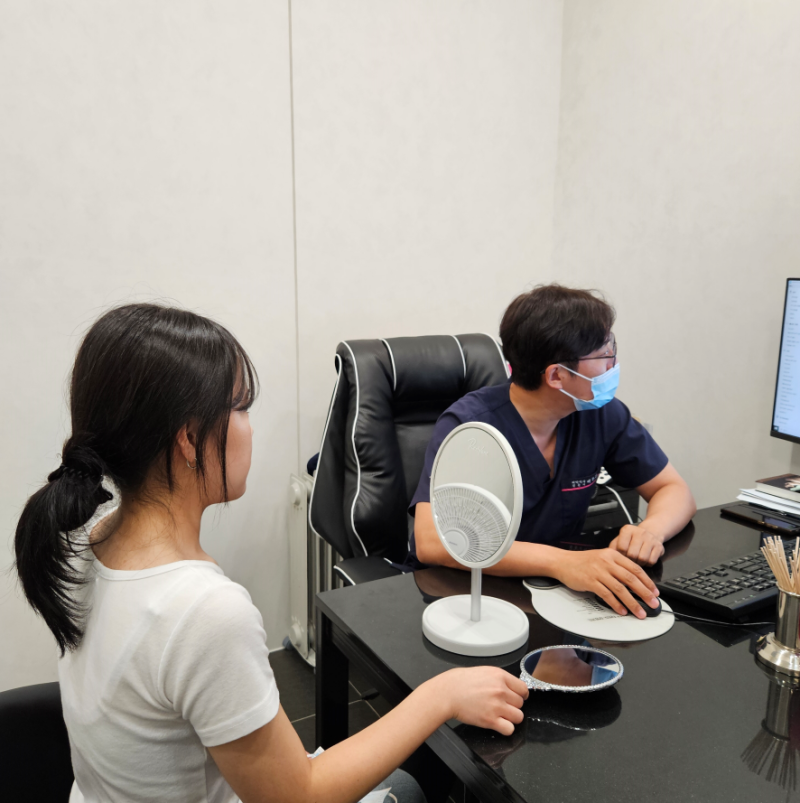
The Aqua Peel interval can vary
depending on your skin type.
Since sebum production and the dead skin cell turnover cycle differ for each person, it is not advisable to follow a fixed interval uniformly.
For example, for oily skin with active sebum production and frequent blackheads, it may be beneficial to start with intervals of 2-3 weeks to stabilize the skin.
On the other hand, for dry or sensitive skin, more recovery time is needed after irritation. Therefore, extending the interval to 3-4 weeks is a way to reduce the burden.

Especially for those whose skin is greatly affected by external environmental factors,
it is even more important to adjust the Cheongju Aqua Peel interval.
It's advisable to manage with a shorter interval during the summer and, conversely, to widen the Aqua Peel interval and reduce the intensity during dry seasons like winter when the skin becomes more sensitive.
If you are trying it for the first time, it is important to start with a relatively short interval and observe how your skin reacts.
The most stable approach is to adjust gradually, as if synchronizing with your skin's rhythm.
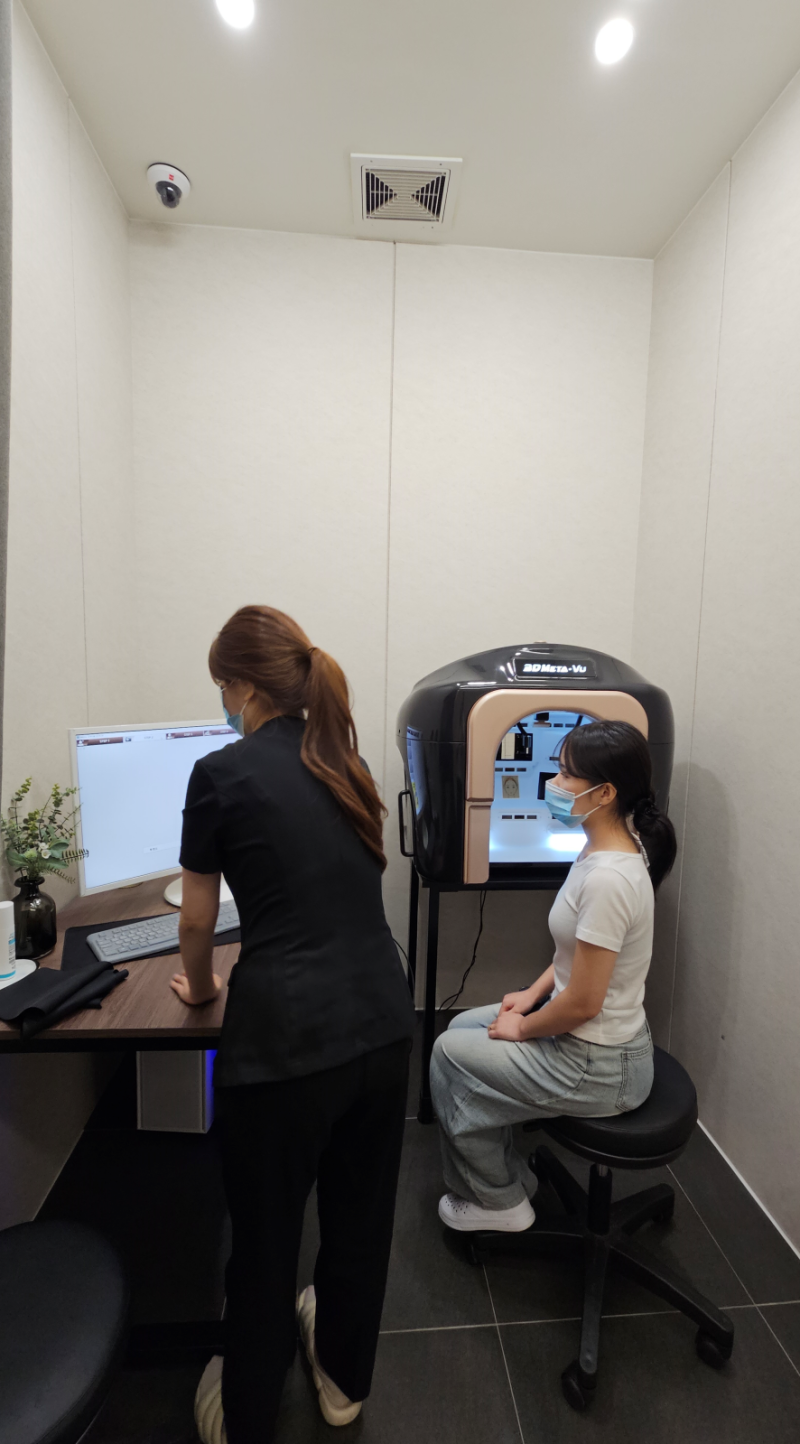
However, this alone
cannot solve all your concerns.
This procedure focuses on removing surface impurities such as sebum, blackheads, and old dead skin cells.
It can be helpful for improving deep pore debris, skin texture, and hydration.
However, it may have limitations for enlarged pores due to loss of elasticity or problems caused by collagen reduction.
In such cases, better results can be expected by combining it with regenerative injection treatments or laser procedures focused on improving elasticity.
In conclusion, it is a suitable procedure for basic sebum management, but it is essentially a 'cleaning' concept.
While you may feel that your skin becomes cleaner and clearer after this procedure, it's important to remember that it is not a 'treatment' for various conditions or problems.
Consider your skin type, lifestyle habits,
and desired improvement direction
to determine the Cheongju Aqua Peel interval
and plan complementary procedures as needed.
This can lead to better results.
Thank you.
*This post was written directly by this medical institution in accordance with Article 56 of the Medical Service Act and may contain medical advertising content depending on the interpretation.
Back to list